Guyana, a South American nation with strong Caribbean influences, boasts a rich and diverse
culture shaped by its Indigenous heritage, African ancestry, Indian traditions, European
colonial history, and modern developments. This cultural blend is evident in various aspects
of daily life, including clothing, language, music, festivals, and literature. Here’s an
overview of these elements:
 Traditional Clothing and Attire:
Traditional clothing in Guyana reflects the country's ethnic diversity. Indigenous communities
wear attire made from natural fibers, often adorned with beads and feathers, particularly during
cultural festivals. Women in Afro-Guyanese communities wear colorful head wraps and dresses,
reflecting African influences. Indo-Guyanese women often wear saris or shalwar kameez, while men
wear kurta pajamas, especially during religious and cultural events. Although modern fashion
dominates daily life, traditional clothing remains significant during national celebrations,
religious ceremonies, and heritage festivals, preserving Guyana’s cultural identity.
Traditional Clothing and Attire:
Traditional clothing in Guyana reflects the country's ethnic diversity. Indigenous communities
wear attire made from natural fibers, often adorned with beads and feathers, particularly during
cultural festivals. Women in Afro-Guyanese communities wear colorful head wraps and dresses,
reflecting African influences. Indo-Guyanese women often wear saris or shalwar kameez, while men
wear kurta pajamas, especially during religious and cultural events. Although modern fashion
dominates daily life, traditional clothing remains significant during national celebrations,
religious ceremonies, and heritage festivals, preserving Guyana’s cultural identity.
 Language and Literature:
English is the official language of Guyana, making it unique in South America. However, Guyanese
Creole is widely spoken in informal settings, blending African, Indian, and European linguistic
influences. Indigenous languages such as Arawak and Carib are still spoken in some communities.
Guyanese literature is deeply rooted in its colonial past and post-independence struggles.
Notable authors like Martin Carter and Wilson Harris have explored themes of identity,
colonialism, and resistance. Indo-Guyanese writer Rajkumari Singh also contributed significantly
to Guyanese literature, highlighting the experiences of Indian immigrants and their descendants.
Today, contemporary writers continue to bring Guyana’s diverse stories to a global audience.
Language and Literature:
English is the official language of Guyana, making it unique in South America. However, Guyanese
Creole is widely spoken in informal settings, blending African, Indian, and European linguistic
influences. Indigenous languages such as Arawak and Carib are still spoken in some communities.
Guyanese literature is deeply rooted in its colonial past and post-independence struggles.
Notable authors like Martin Carter and Wilson Harris have explored themes of identity,
colonialism, and resistance. Indo-Guyanese writer Rajkumari Singh also contributed significantly
to Guyanese literature, highlighting the experiences of Indian immigrants and their descendants.
Today, contemporary writers continue to bring Guyana’s diverse stories to a global audience.
 Music and Dance:
Music and dance play a vital role in Guyanese culture, blending African, Indian, and Caribbean
influences. Traditional music includes folk drumming, bhajans (Hindu devotional songs), and
chutney music—a fusion of Indian and Caribbean sounds. Soca, calypso, reggae, and dancehall are
popular, especially during festive occasions. The Mashramani festival, Guyana’s version of
Carnival, showcases elaborate costumes, street parades, and vibrant performances. African
drumming and Indian classical dance are often performed during cultural and religious events.
Modern genres like hip-hop and dancehall have gained popularity among younger generations,
blending traditional influences with contemporary beats.
Music and Dance:
Music and dance play a vital role in Guyanese culture, blending African, Indian, and Caribbean
influences. Traditional music includes folk drumming, bhajans (Hindu devotional songs), and
chutney music—a fusion of Indian and Caribbean sounds. Soca, calypso, reggae, and dancehall are
popular, especially during festive occasions. The Mashramani festival, Guyana’s version of
Carnival, showcases elaborate costumes, street parades, and vibrant performances. African
drumming and Indian classical dance are often performed during cultural and religious events.
Modern genres like hip-hop and dancehall have gained popularity among younger generations,
blending traditional influences with contemporary beats.
 Ceremonies and Festivals:
Guyana’s festivals reflect its multicultural heritage. Mashramani, celebrated on Republic Day
(February 23), is one of the largest national events, featuring parades, music, and dancing.
Phagwah (Holi), celebrated by Indo-Guyanese communities, is a festival of colors symbolizing
unity and joy. Diwali, the Hindu festival of lights, is marked by the lighting of diyas (oil
lamps) and grand celebrations. Emancipation Day (August 1) honors the abolition of slavery and
is celebrated with African drumming, dance, and storytelling. Christmas and Easter are widely
observed, with Guyana’s Christian communities engaging in festive traditions. Indigenous
communities also hold unique celebrations, such as the annual Amerindian Heritage Month,
showcasing traditional crafts, music, and cuisine. These festivals bring together Guyanese from
all backgrounds, fostering national unity and cultural pride.
Ceremonies and Festivals:
Guyana’s festivals reflect its multicultural heritage. Mashramani, celebrated on Republic Day
(February 23), is one of the largest national events, featuring parades, music, and dancing.
Phagwah (Holi), celebrated by Indo-Guyanese communities, is a festival of colors symbolizing
unity and joy. Diwali, the Hindu festival of lights, is marked by the lighting of diyas (oil
lamps) and grand celebrations. Emancipation Day (August 1) honors the abolition of slavery and
is celebrated with African drumming, dance, and storytelling. Christmas and Easter are widely
observed, with Guyana’s Christian communities engaging in festive traditions. Indigenous
communities also hold unique celebrations, such as the annual Amerindian Heritage Month,
showcasing traditional crafts, music, and cuisine. These festivals bring together Guyanese from
all backgrounds, fostering national unity and cultural pride.
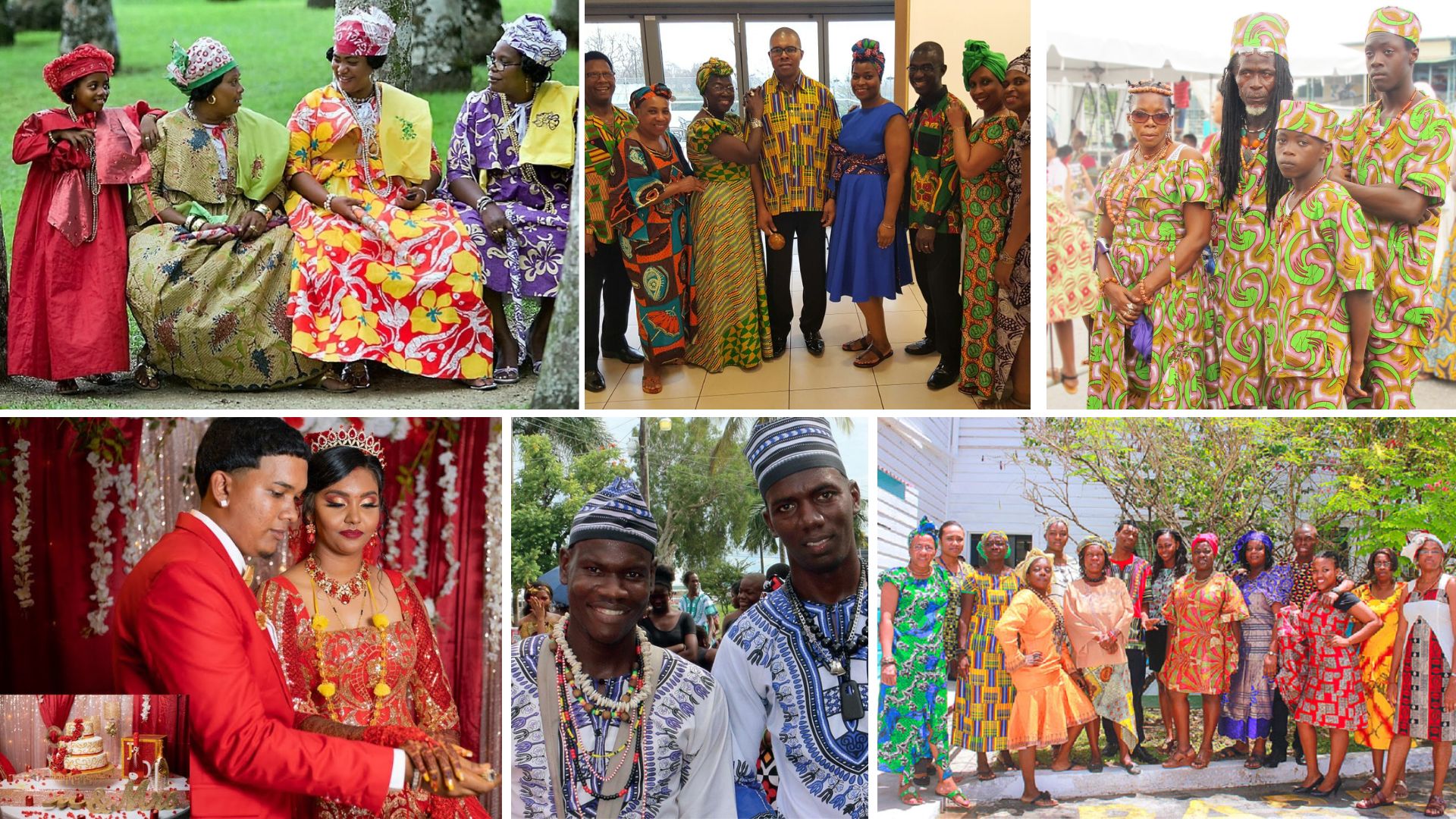
Guyana Clothing
While most Guyanese in urban areas wear modern, Western-style clothing, traditional attire remains important during cultural celebrations. Indigenous communities wear garments made from natural fibers, decorated with beads and feathers. Afro-Guyanese women often wear colorful head wraps and dresses, while Indo-Guyanese women wear saris or shalwar kameez. These traditional outfits reflect Guyana’s diverse heritage and are proudly worn during festivals and special events.
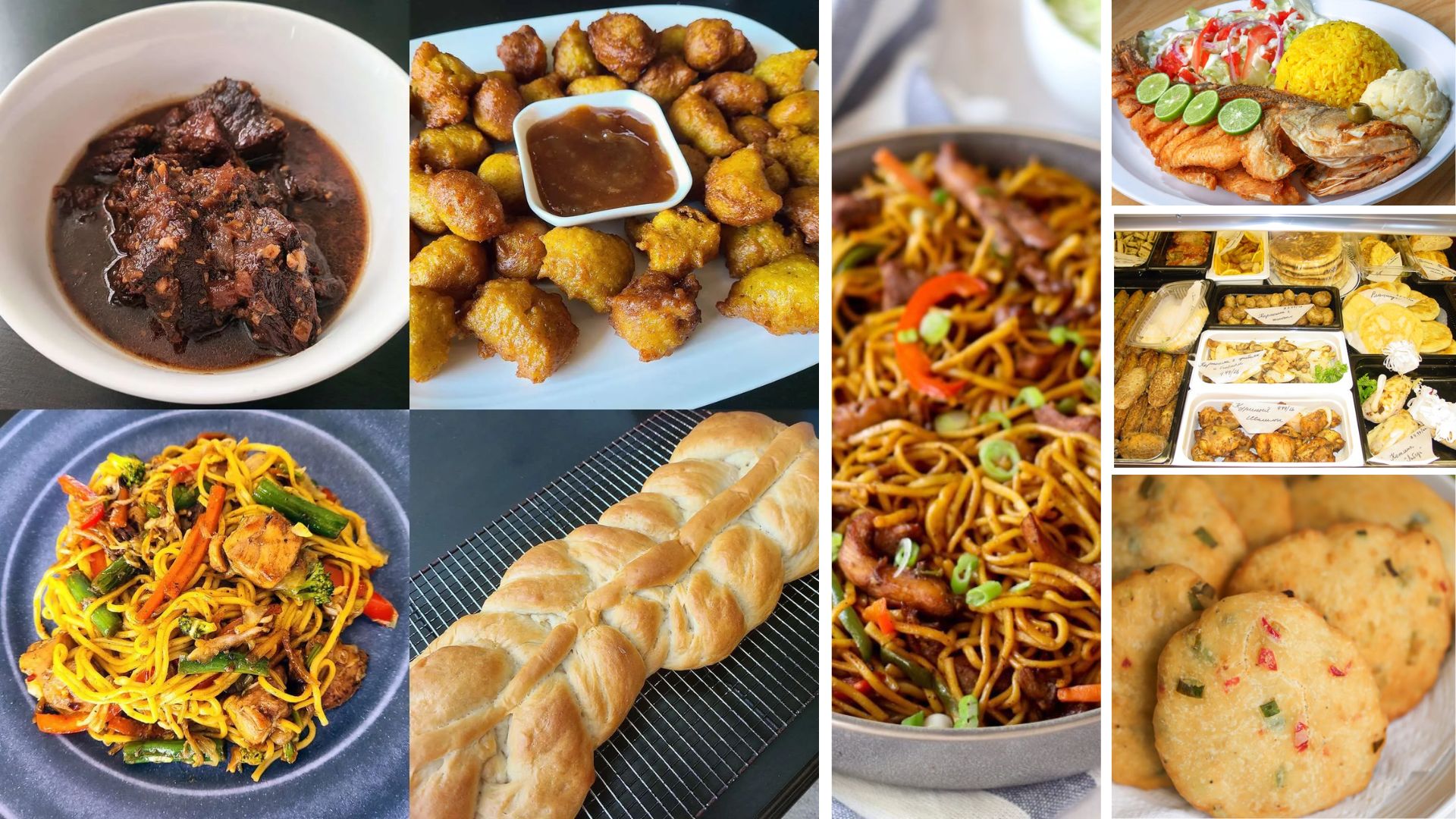
Guyana Food
Guyanese cuisine is a rich fusion of African, Indian, Indigenous, and European influences. One of the most popular dishes is pepperpot, a slow-cooked meat stew flavored with cassareep (a cassava-based sauce) and spices. Cook-up rice, a one-pot dish with rice, beans, and meat, is a staple. Other favorites include roti and curry, metemgee (a hearty dish of ground provisions in coconut milk), and dhal and rice. Guyanese cuisine reflects the country’s diverse heritage, using fresh local ingredients like cassava, plantains, and tropical fruits.
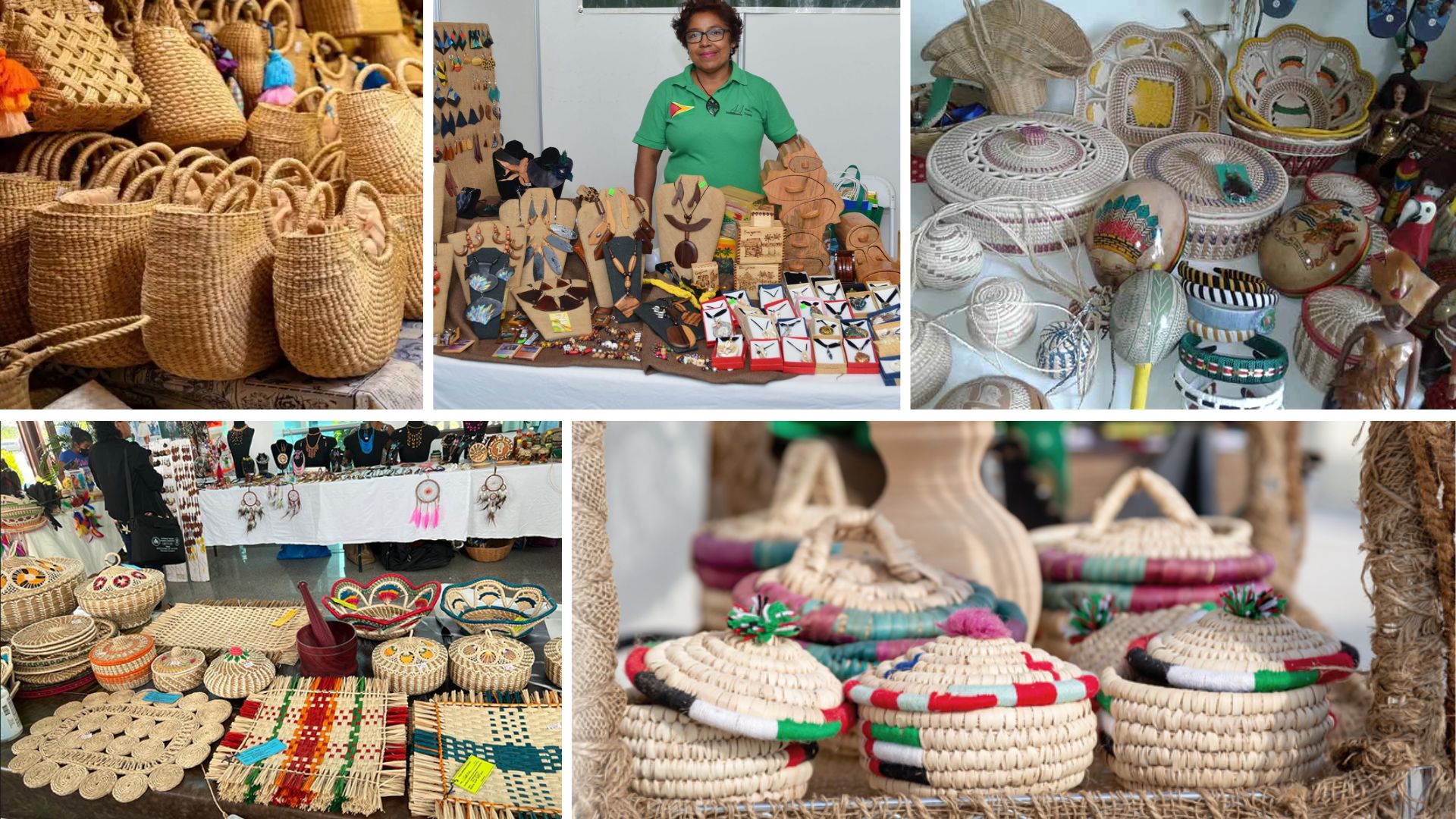
Guyana Arts and Crafts
Arts and crafts in Guyana reflect the country's diverse cultural influences, including Indigenous, African, and Indian traditions. Indigenous artisans create intricate baskets, pottery, and woven hammocks using natural materials like tibisiri and kufa. Woodcarving is also popular, with detailed sculptures depicting wildlife and cultural symbols. Indo-Guyanese crafts include colorful textiles and jewelry, while Afro-Guyanese artisans produce vibrant paintings and handmade drums. Markets and festivals showcase these crafts, preserving Guyana’s artistic heritage while providing economic opportunities for local communities.
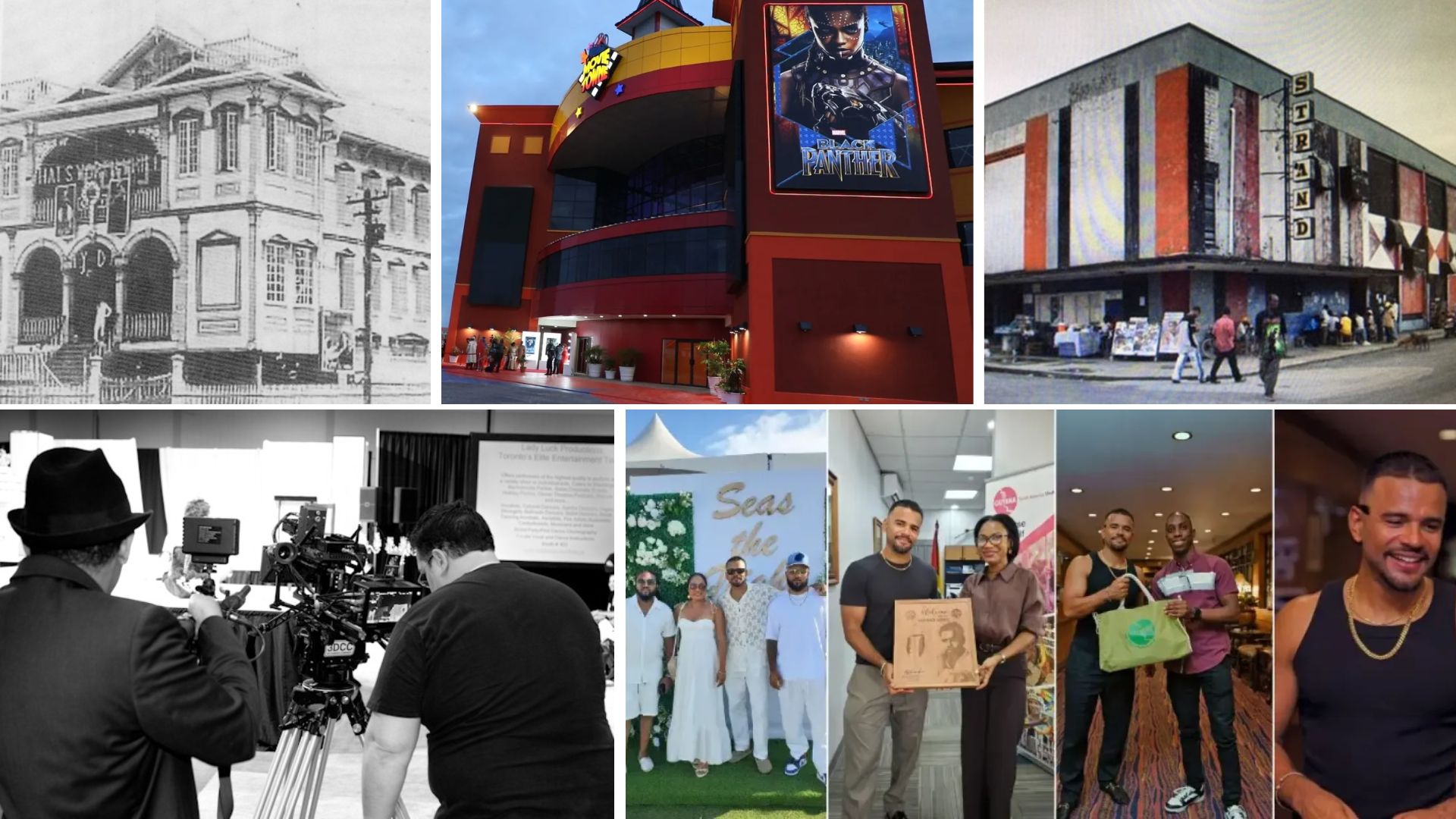
Guyana Film Industry
Guyana’s film industry is still emerging, with filmmakers exploring themes of culture, history, and identity. Many productions focus on the country’s colonial past, Indigenous heritage, and social issues like migration and economic struggles. Documentaries play a key role in preserving Guyanese history, while independent filmmakers are gaining recognition at regional film festivals. Though the industry is small, efforts to promote local talent and storytelling are growing, helping to shape Guyana’s presence in global cinema.

Guyana Economy
Guyana has one of the fastest-growing economies in South America, driven by agriculture, mining, and the recent oil boom. The country is a major exporter of rice, sugar, and seafood, while gold, bauxite, and timber also contribute significantly. Offshore oil discoveries have attracted global investment, transforming Guyana into an emerging energy powerhouse. Despite economic growth, challenges remain, including income inequality and infrastructure development. Tourism is expanding, with eco-tourism highlighting Guyana’s rich biodiversity. The government continues to implement policies to diversify the economy, ensuring long-term stability and sustainable development for future generations.